
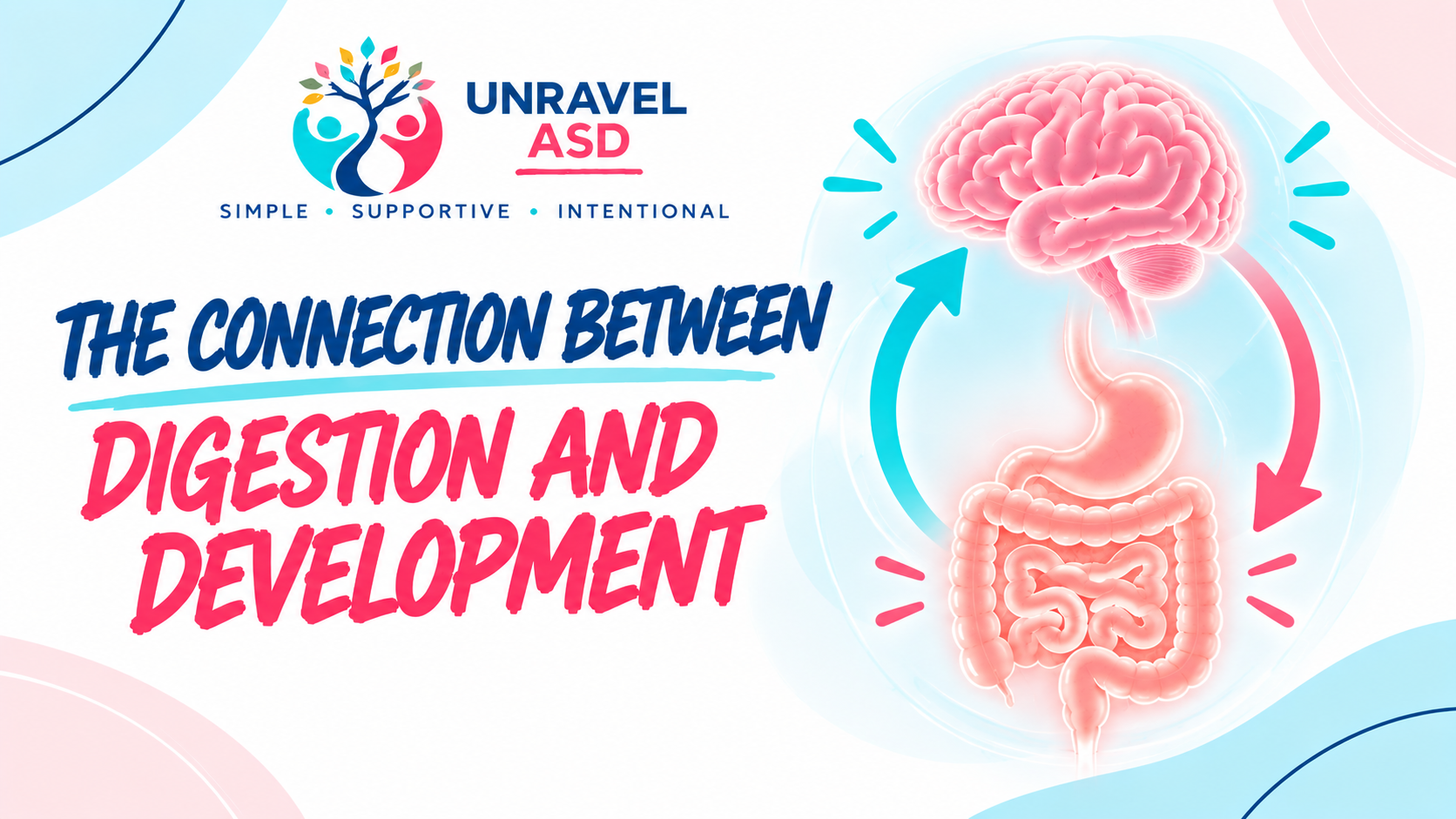
The Connection Between Digestion and Development
Digestion and development may seem like two completely separate topics.
One happens in the gut. The other involves the brain, learning, communication, movement, behavior and the many skills children develop over time.
But the body doesn't operate as a collection of completely separate systems.
The digestive system helps break down food and absorb nutrients the body needs for normal growth and function. At the same time, the digestive tract and brain communicate through what researchers commonly call the gut-brain axis.
Understanding that connection can help parents see why nutrition and digestive wellness are important parts of a child's overall foundation.
The gut-brain axis describes the two-way communication between the gastrointestinal system and the brain.
This communication involves several interconnected systems, including the nervous system, immune system, hormones and chemical signals produced within the digestive environment.
One of the major communication pathways is the vagus nerve, which carries signals between the brain and organs throughout the body, including the digestive tract.
This doesn't mean that everything happening in the brain originates in the gut.
It means the brain and digestive system communicate with one another, which is why researchers continue studying the relationship between digestive health, nutrition and neurological function.
Children need adequate nutrition to support normal growth and development.
But eating nutritious food is only the beginning.
Food must also be:
Digested → broken down → absorbed → utilized by the body
The digestive system breaks food into smaller components, while the small intestine is responsible for absorbing many nutrients.
Those nutrients then participate in processes throughout the body.
For example, nutrients such as iron, folate, vitamin B12, vitamin D, protein and essential fatty acids all have established roles in normal growth, neurological function or development.
That's one reason nutrition and digestion belong in the developmental conversation.
There is a biological connection between the digestive system and the brain, but it's important not to oversimplify it.
The gut doesn't independently control a child's speech, learning, behavior or developmental milestones.
However, the brain receives information from throughout the body, including the gastrointestinal system.
Researchers are particularly interested in the gut-brain axis and the ways the nervous system, immune signaling, microbial environment and metabolism may interact.
This is an active area of research, especially in relation to neurological and developmental health.
The science is much more complex than saying:
“Fix the gut and you fix development.”
That's not the Unravel ASD message.
Our approach is:
Support the child's overall foundation so parents can better understand the complete picture.
The digestive tract contains trillions of microorganisms collectively known as the gut microbiome.
These microorganisms interact with the foods we eat and participate in numerous biological processes.
Scientists are studying how the gut microbiome may interact with:
The microbiome is influenced by many factors, including diet, age, environment, medications and other individual differences.
Research into the microbiome and child development is growing, but there is still much we don't know.
That's why I would be cautious of anyone promising that changing a child's microbiome will produce a specific developmental outcome.
There is also a much simpler reason parents should pay attention to digestion:
Digestive discomfort can affect everyday life.
A child experiencing constipation, diarrhea, abdominal discomfort or other gastrointestinal problems may have difficulty feeling comfortable enough to participate fully in meals, school, play, sleep or daily routines.
And some children may have difficulty clearly communicating what they're feeling.
That makes observing digestive patterns especially valuable.
Persistent gastrointestinal symptoms deserve evaluation by a healthcare professional rather than simply assuming they're behavioral or developmental.
Nutrition labels tell us what's present in a food or supplement.
They don't tell the entire story of what happens after it enters the body.
Normal digestion and intestinal function help make nutrients available for absorption.
This doesn't mean that digestive support automatically corrects nutrient deficiencies.
A deficiency can have many causes and sometimes requires testing, diagnosis and targeted treatment.
But it does explain why nutrition and digestion shouldn't be viewed as completely separate conversations.
→ What Are Active Forms of Vitamins—and Why Do They Matter?
This is where I'd internally link to your Active Forms article.
Parents often arrive at Unravel ASD already researching vitamins, supplements and nutritional products.
Before continually adding more, I want families to look at the child's existing foundation.
What are they eating?
How is digestion?
How is hydration?
Are bowel habits regular?
What supplements are already being used?
Are foods fortified with additional nutrients?
Are there patterns parents have noticed?
Looking at those pieces first gives us context.
→ Why “More” Isn't Always Better When It Comes to Children's Nutrition
At Unravel ASD, digestive support isn't presented as a treatment for developmental delay or autism.
It's one part of a broader foundation-first approach.
The Unravel ASD Method™ focuses on:
Food • Digestion • Routine • Skill Building • Progress Tracking
We look at what the child is eating.
We support everyday digestive wellness.
We create predictable routines.
We intentionally build functional skills.
And we track what parents observe over time.
That allows parents to make changes thoughtfully instead of constantly guessing what to try next.
When several things are changed simultaneously, it becomes difficult to know what actually corresponded with a change.
That's why observation is such an important part of our approach.
Parents can pay attention to patterns involving:
Digestion • Eating • Sleep • Attention • Communication • Daily skills • Overall routine
These observations don't prove that one intervention caused a developmental change.
But tracking them over time can help parents recognize patterns and provide useful information when speaking with healthcare or educational professionals.
The relationship between digestion and development is real, but it is also complex.
The digestive system helps the body process food and absorb nutrients.
The gut and brain communicate through multiple biological pathways.
Nutrition provides essential building blocks for normal growth and neurological function.
And digestive comfort can influence how a child experiences everyday activities.
But digestive support should not be presented as a cure or standalone treatment for developmental differences.
At Unravel ASD, we look at digestion because it's an important part of the child's overall foundation.
Simple • Supportive • Intentional
Now that we've connected food, digestion and development, the next step is moving from what goes into the body to what happens throughout the child's day:
→ How to Build a Simple Daily Routine That Supports Your Child’s Development
Unravel ASD™ supports total wellness through nutrition and education. "ASD” stands for All Symptoms Diagnosed — a holistic approach to understanding every child’s needs. Our supplements and materials are not intended to diagnose, treat, cure, or prevent any disease.